
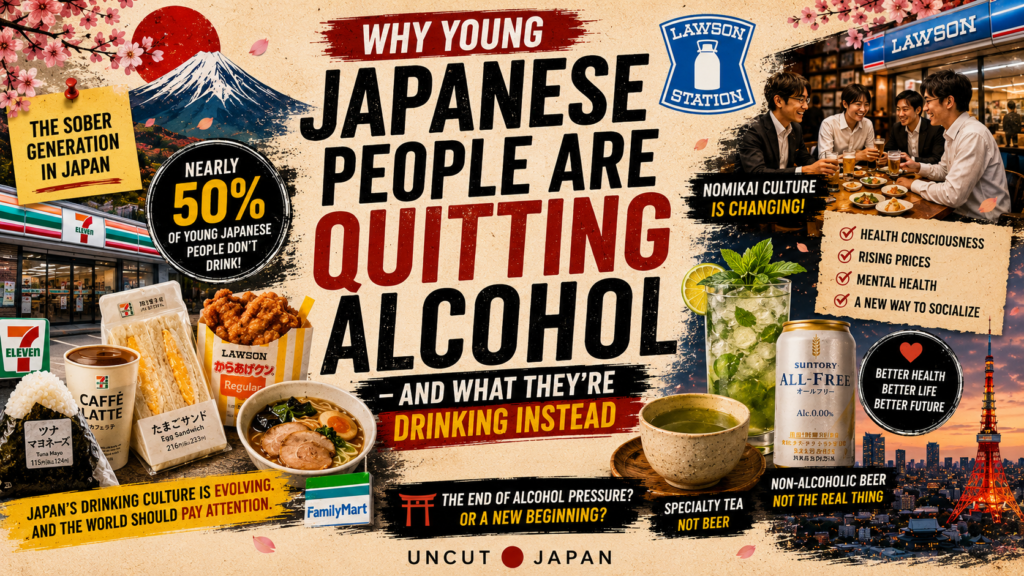
You go to a nomikai — a traditional Japanese drinking party — in 2026 and something is different.
There are fewer people getting drunk. Some are nursing virgin mojitos. One person just ordered water. Another is sipping an elaborate specialty tea. And nobody is giving them shit about it.
This would have been unthinkable 10 years ago.
In traditional Japanese culture, saying no to alcohol was essentially saying no to belonging. Nomikai culture — workplace drinking parties — was mandatory. The unspoken rule was simple: attend, drink heavily, and use the alcohol-fueled chaos as an excuse to say things you couldn’t say sober. Bonding through booze was the foundation of Japanese work life.
That entire system is collapsing.
Nearly half of young Japanese people surveyed in 2026 are now opting out of alcohol altogether. Not cutting back. Not moderation. Just… not drinking. And unlike in previous generations where this was seen as antisocial or weird, in 2026 it’s becoming completely normal.
What’s happening in Japan right now is a full cultural recalibration around alcohol — one that’s reshaping everything from bars to corporate culture to how young people socialize.
And it’s the most interesting thing happening in Japanese society that nobody outside Japan is talking about.
The Data: How Quickly This Is Changing
The numbers are stark.
Recent surveys show that nearly 50% of Japanese people in their 20s and 30s are now choosing not to drink at all or to drink only occasionally. This isn’t a gradual decline — it’s a sharp shift happening in real time in 2025-2026.
For context: in 2015, approximately 25% of young Japanese people identified as non-drinkers. In 2026, that number has nearly doubled.
The shift is most dramatic among women. Female non-drinkers now outnumber regular female drinkers in Japan’s urban centers. This is breaking a traditionally male-dominated drinking culture where women were expected to participate heavily in nomikai to show company loyalty.
But it’s not just women. Men are quitting too. Young men cite health, mental health awareness, and simple preference as reasons. Many just don’t see the appeal of getting drunk in a room full of coworkers anymore.
The alcohol industry is panicking. Major beer companies are investing heavily in non-alcoholic alternatives. Suntory, Asahi, and Kirin have all launched premium non-alcoholic lines in the last 18 months. These aren’t cheap gimmicks — they’re sophisticated products designed to appeal to a generation that sees drinking as optional, not mandatory.
Why This Is Happening: Three Reasons
1. Health Consciousness and the Longevity Obsession
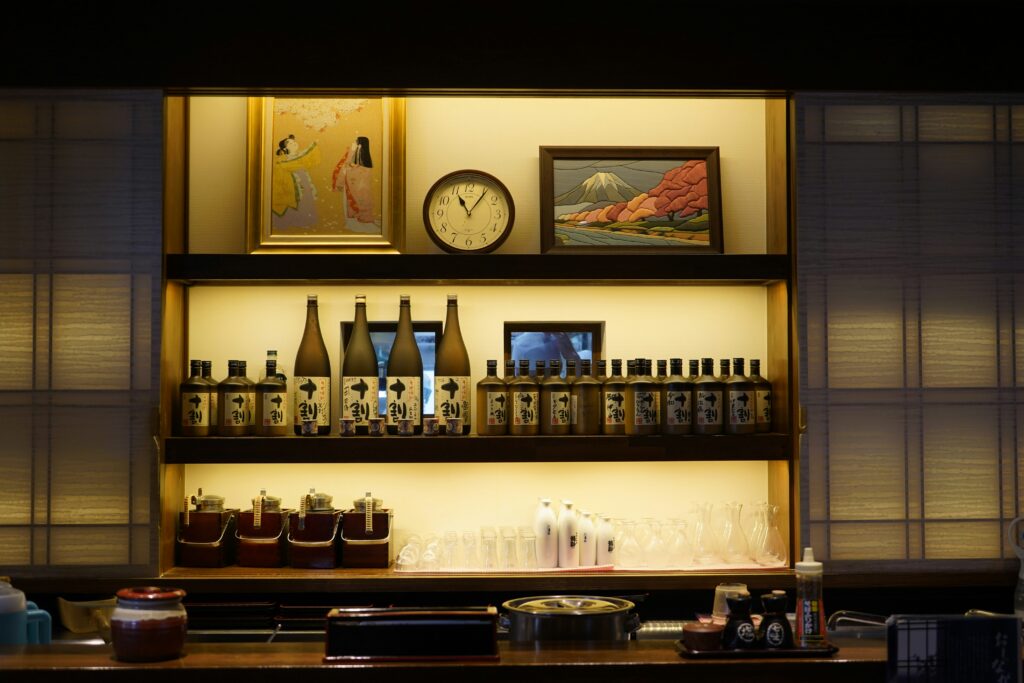
Japan has the longest life expectancy on earth — 84 years on average. And Japanese culture is obsessed with understanding why and replicating it.
Part of that obsession is understanding health on a molecular level. Japanese people consume more health information per capita than almost any other developed nation. And that information increasingly points to alcohol as something to eliminate or minimize.
The shift isn’t moralistic. It’s practical. Young Japanese people are looking at their bodies and thinking “why would I voluntarily consume something that damages my liver, disrupts my sleep, and increases my cancer risk?”
This hits different in Japan because health consciousness isn’t fringe here — it’s mainstream. Counting steps, tracking sleep, measuring stress — these are normal activities for ordinary Japanese people, not fitness freaks.
When you’re already measuring everything else, cutting alcohol becomes a logical optimization.
2. Rising Prices and Economic Pressure
Beer prices in Japan have risen dramatically since 2023. A night out drinking, which used to be an affordable social ritual, now costs real money.
Young Japanese people are earning less than their parents’ generation did at the same age. Real wages have stagnated while cost of living has increased. In this environment, spending ¥5,000-10,000 on a nomikai feels less like a necessary social investment and more like a waste.
The calculation young people are making is simple: I can either spend money getting drunk with people I see every day at work, or I can use that money for something I actually want.
More are choosing the latter.
3. Mental Health Awareness and Work-Life Boundaries
This is the deepest reason and it’s genuinely cultural change.
Japanese corporate culture traditionally used alcohol as pressure release valve. The drinking party was the place where hierarchy could temporarily disappear, where people could complain, where they could be human instead of functional.
But younger Japanese people are rejecting this model entirely. They’re asking a different question: “Why should I need alcohol to handle work stress? Maybe the problem is work, not that I’m not drinking enough.”
This connects to broader shifts in Japanese work culture. Japan’s overwork problem — karoshi, death by overwork — is finally being taken seriously by younger generations as something to resist, not accept.
Quitting alcohol becomes part of setting boundaries. It’s saying: “I’m not using substances to manage a broken system. I’m just going to work a reasonable amount and not destroy my health in the process.”
Companies are getting the message. Some major corporations have stopped holding mandatory nomikai. Others have made them officially optional for the first time. A few have created “alcohol-free nomikai” — the contradiction now possible to name — where bonding happens without booze.
What Young Japanese People Are Actually Drinking Instead
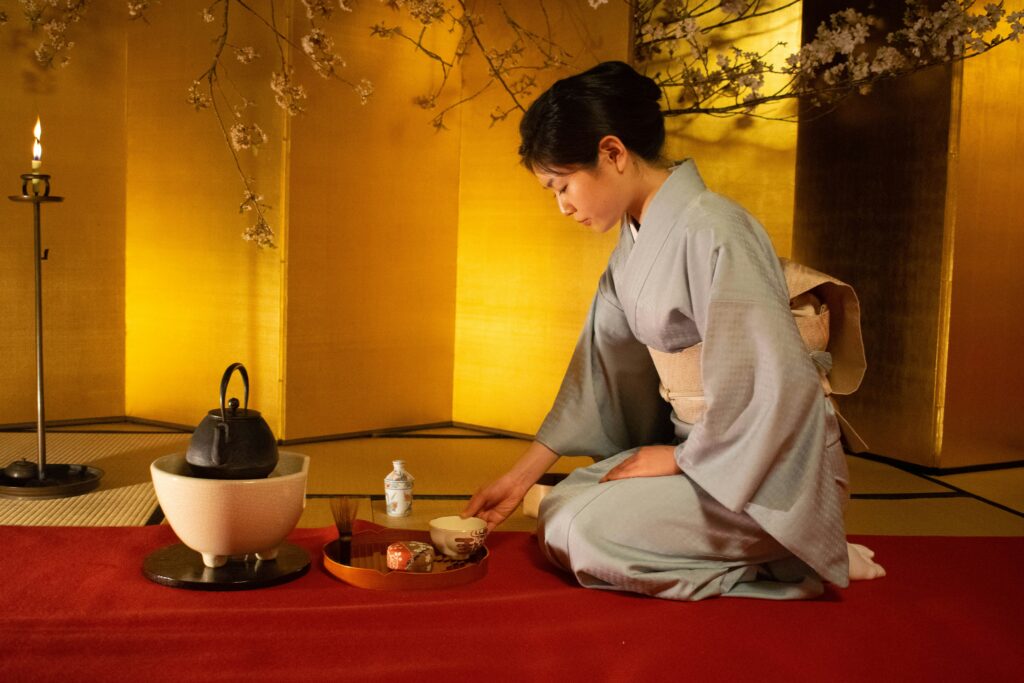
It’s not just water.
The beverage industry in Japan is exploding with alternatives. And they’re not cheap gimmicks — they’re thoughtfully designed products for people who want the social experience of going out without the alcohol.
Specialty Tea Culture
Tea has become genuinely trendy among young Japanese people. Not casual tea — carefully sourced, sometimes expensive tea. Specialty tea shops have opened in major cities with the same aesthetic and price point as nice bars.
You go to one of these places, order a ¥1,200 oolong tea, and spend 30 minutes in a beautiful space with friends. The experience is structured the same as a bar visit but without the alcohol component.
Premium Non-Alcoholic Drinks
Japan’s beer companies have finally figured out how to make non-alcoholic beer taste like actual beer. These aren’t the sad drinks from 20 years ago. They’re legitimate products.
But beyond that, companies are creating entirely new categories. Alcohol-free cocktails made with premium ingredients. Sophisticated non-alcoholic aperitifs. Basically — all the bars and aesthetic complexity of alcohol culture, just without the alcohol.
Mocktail Bars
Actual dedicated mocktail bars have opened in Tokyo, Osaka, and Kyoto. These are not afterthoughts. They’re designed with the same care as cocktail bars, with skilled bartenders creating complex drinks without alcohol.
These places are packed with young people. Not as a sad alternative to “real” bars — they’re designed to be equally cool and equally expensive.
Cafes Staying Open Later
One of the smartest changes: cafes in major Japanese cities are now staying open until 11pm or midnight specifically to capture the social drinking crowd.
The experience: you can sit in a beautifully designed cafe, order an elaborate specialty coffee or tea-based drink, and socialize for hours. It’s the same social need as a bar, just without alcohol.
How This Is Reshaping Japanese Social Culture
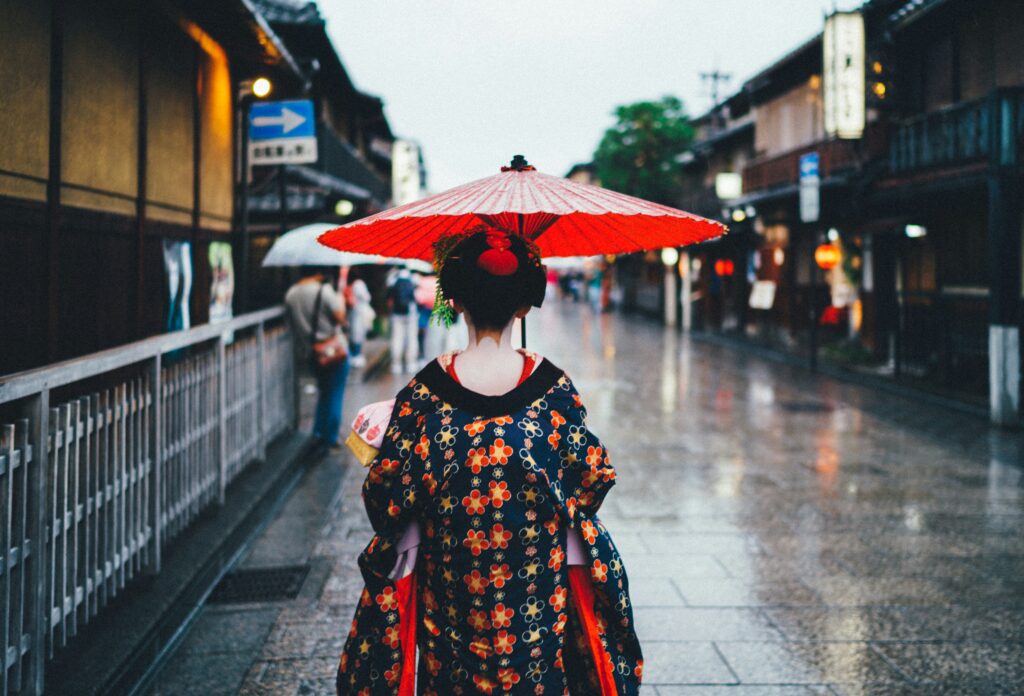
The most interesting thing happening is how completely normal it’s become to not drink.
You can go to a nomikai in 2026 and order a mocktail without anyone treating it as weird or commenting on it. That’s a massive cultural shift.
What’s replacing alcohol as the bonding mechanism is conversation. Actual dialogue. When people aren’t focused on getting drunk, they’re actually paying attention to what others are saying.
Some older Japanese people describe this as cold. Less fun. Less ability to escape.
Younger people describe it as healthier. More honest. A way to actually enjoy social time instead of enduring it.
This is becoming visible in workplaces. Teams that don’t revolve around alcohol-fueled bonding are reporting better relationships. More communication happens during the day. Less needs to happen in the evening after drinking.
Some companies are finding that eliminating mandatory nomikai actually improves workplace dynamics because people bond through work performance and daily interaction rather than through shared intoxication.
What This Means for Global Alcohol Culture
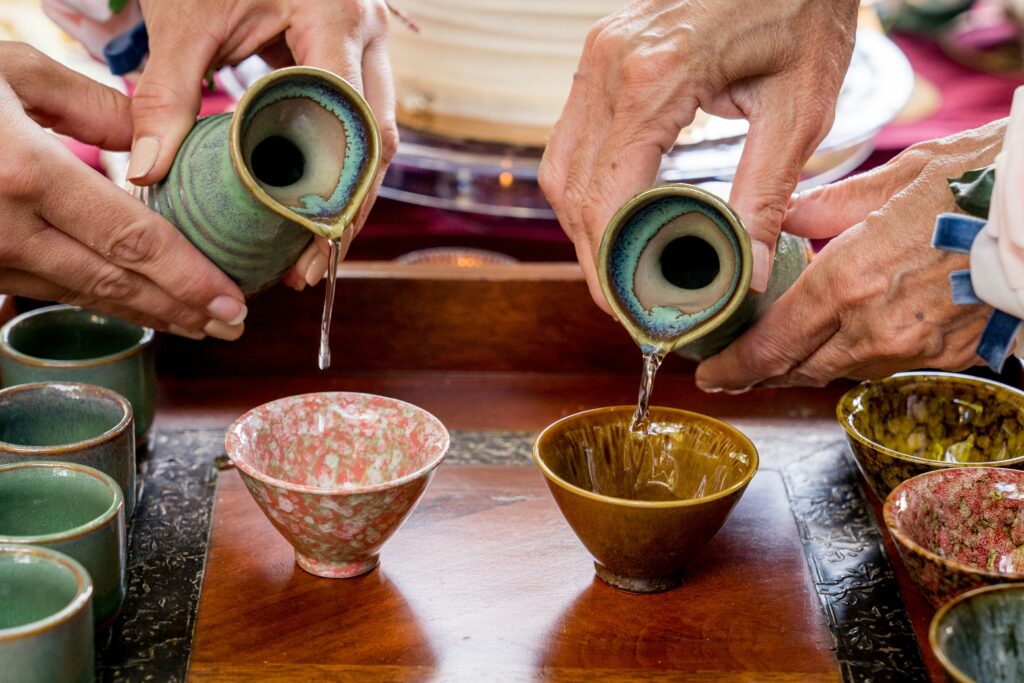
Japan isn’t unique in seeing this shift — similar trends are happening in South Korea, Singapore, and increasingly in Australia and parts of Europe.
But Japan’s shift is the most dramatic because it’s the most complete rejection of an alcohol-centered culture.
What’s interesting globally is that this is happening despite alcohol being completely legal and socially acceptable. It’s not prohibition. It’s not moral. It’s a generation simply deciding that alcohol isn’t necessary for their lives.
This will reshape not just Japan but global alcohol markets. If the largest generational cohort in one of the world’s richest nations is choosing not to drink, the alcohol industry has to adapt globally, not just locally.
The companies that figure out how to make sobriety cool — through sophisticated alternatives and genuine social infrastructure — are going to capture an enormous market.
It’s changing rapidly. Mandatory nomikai are becoming optional at many companies. Younger executives are deprioritizing alcohol-based bonding. But in some traditional industries and older companies, nomikai culture remains strong. The change is real but uneven.
Completely. In 2026, it’s far more acceptable than it was even 5 years ago. Mocktail bars, late-night cafes, and alcohol-free socializing options are mainstream now, especially in major cities.
Health consciousness, rising prices, economic pressure, and a broader cultural shift toward work-life balance and mental health awareness. It’s not one reason — it’s cultural change happening simultaneously on multiple levels.
I have been struggling with this issue for a while and your post has provided me with much-needed guidance and clarity Thank you so much
thank you for reading the blog 👍❤️