Some words just don’t translate.
Not because the feeling doesn’t exist — but because most languages never bothered to name it.
Japanese did.
Japanese culture pays attention to things other cultures gloss over. The quality of light through leaves. The ache of watching something beautiful end. The comfort of empty space. Japanese has specific words for all of these — and once you learn them, you’ll start noticing feelings you’ve had your whole life but could never quite name.
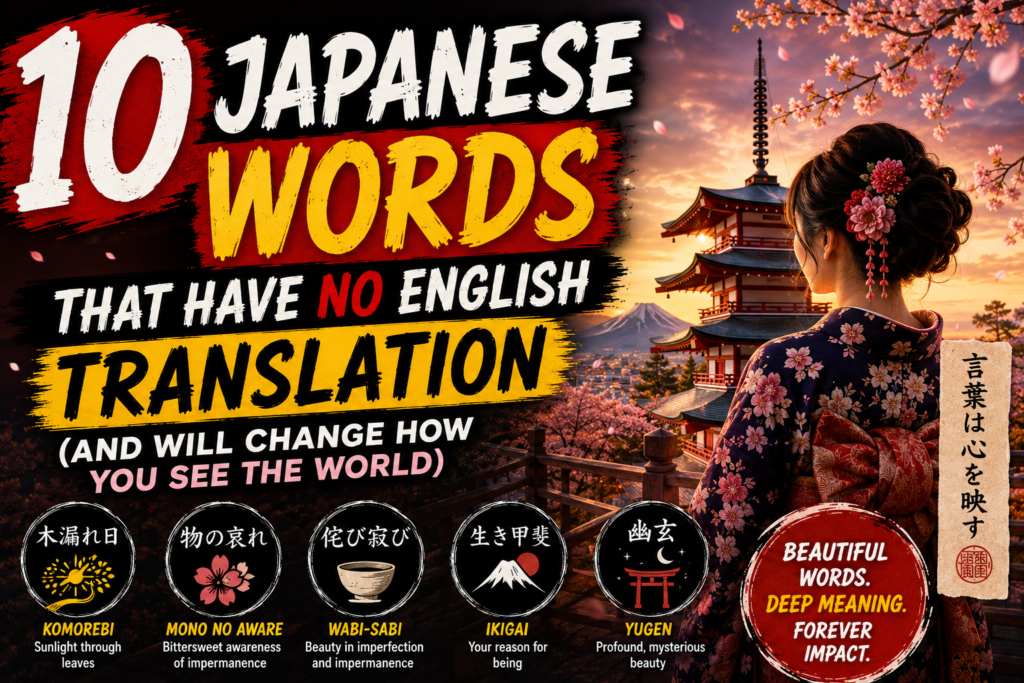
Here are 10 of the most beautiful untranslatable Japanese words. And the exact moments in your life where you’ve already felt every single one.
1. 木漏れ日 — Komorebi
Pronunciation: Ko-mo-re-bi
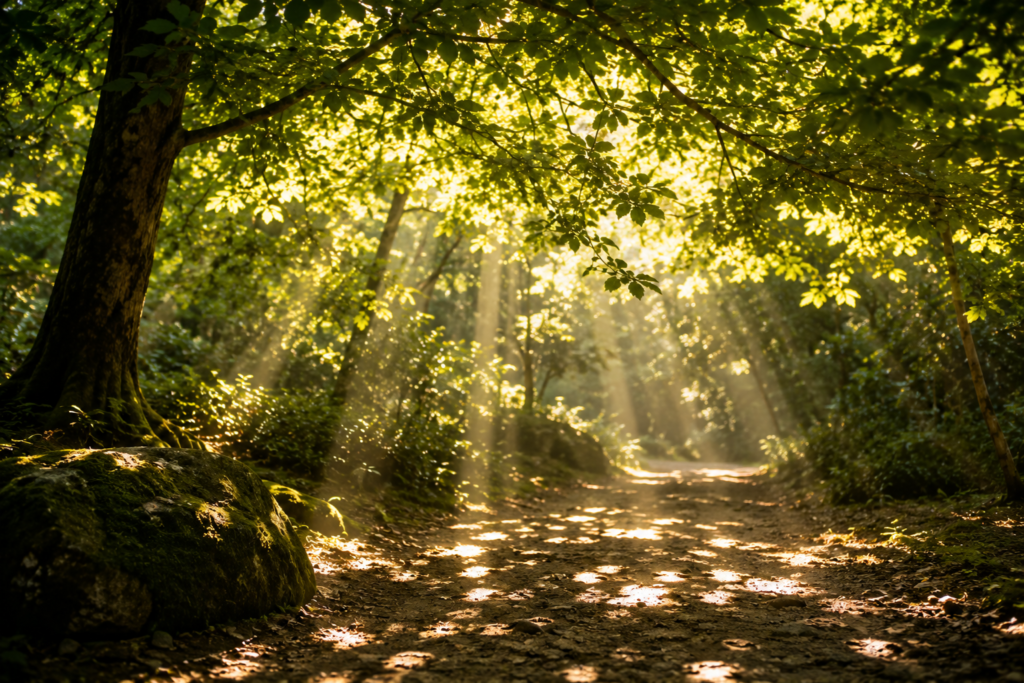
Meaning: The dappled, shifting light that filters through tree leaves and scatters across the ground below.
Not sunlight. Not shade. That specific in-between — the moving patterns of light and shadow that only happen when wind moves through branches.
You’ve seen it thousands of times. Walking through a park. Sitting under a tree. Lying on the grass on a summer afternoon. That exact quality of light has a name. It’s komorebi.
Once you know this word, you’ll start looking for it. Actively seeking it out just so you can think the word.
That’s what a good word does. It makes you see something you were already looking at.
2. 物の哀れ — Mono no Aware
Pronunciation: Mo-no no A-wa-re
Meaning: The bittersweet awareness that beautiful things don’t last — and the deep appreciation that comes from knowing that.
You know this feeling.
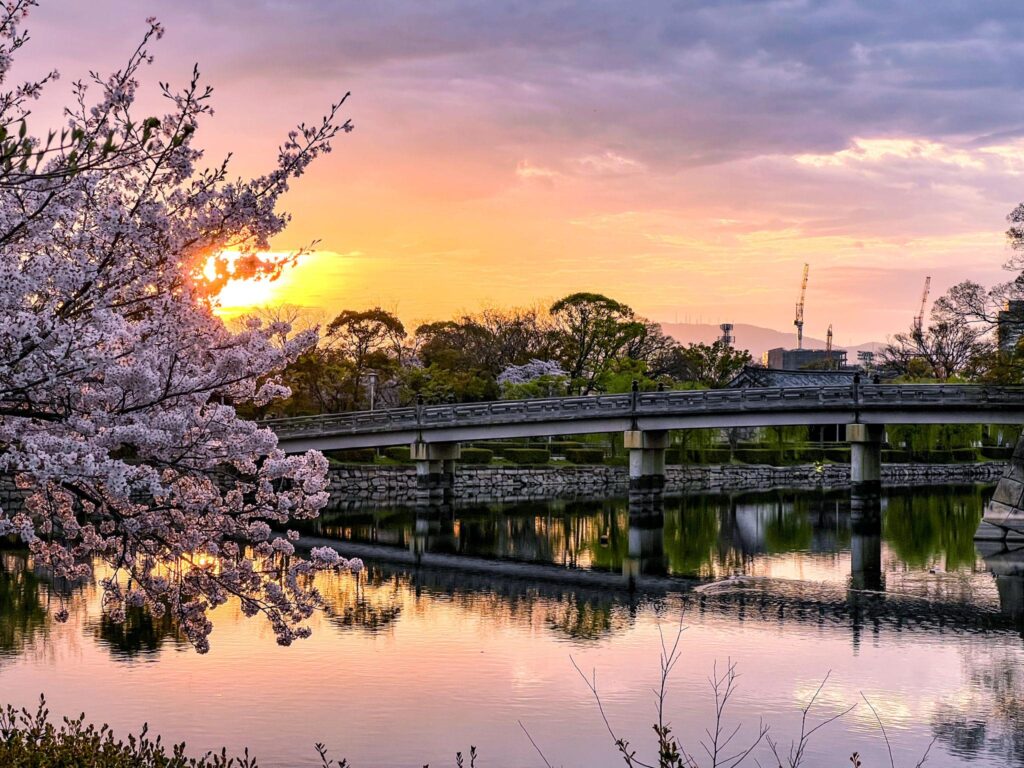
Watching cherry blossoms fall. Sitting at a party that’s winding down, looking at everyone laughing, feeling present and already nostalgic at the same time. Watching a perfect sunset knowing it’ll be dark in ten minutes.
Mono no aware is not sadness. It’s something more specific — the emotional awareness that beauty is finite, and that finitude is exactly what makes it beautiful.
This concept is woven into Japanese culture at every level. It’s why cherry blossom season is celebrated so intensely — the flowers last two weeks. The brevity is the whole point.
3. 侘び寂び — Wabi-Sabi
Pronunciation: Wah-bi Sah-bi
Meaning: The beauty of imperfection, impermanence, and incompleteness.
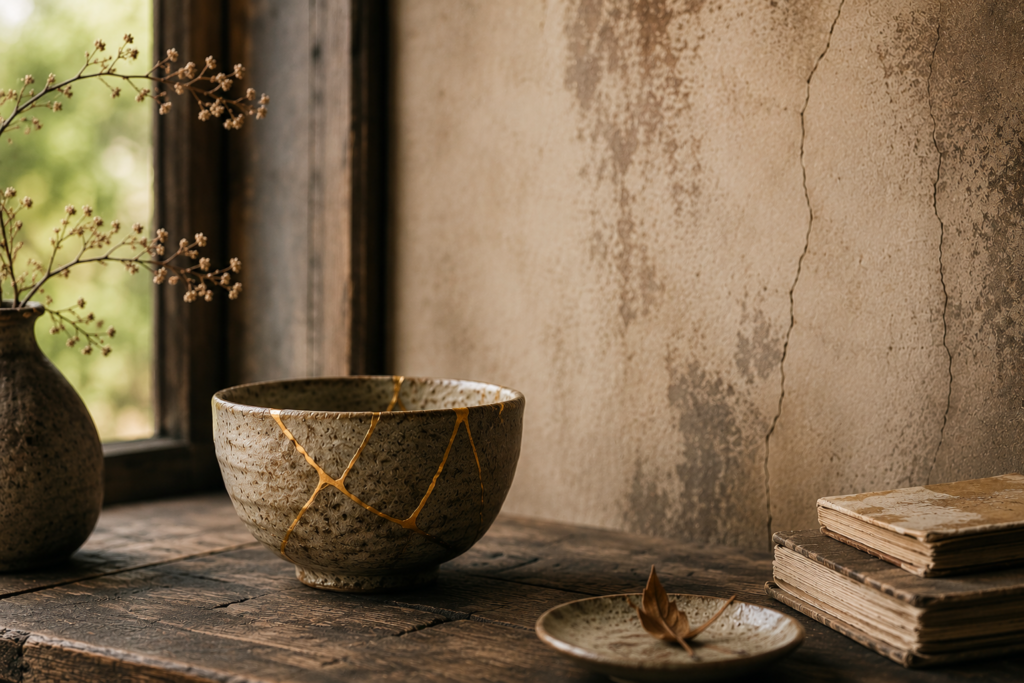
The cracked glaze on an old ceramic bowl. The moss growing on a stone path. A wooden table worn smooth by decades of use. A building that shows its age honestly instead of hiding it.
Western aesthetics chase perfection — symmetry, newness, shine. Wabi-sabi is the opposite. It sees the crack in the bowl as the most interesting part of the bowl. It finds weathered more beautiful than pristine.
Once you understand wabi-sabi, you start seeing it everywhere. Your grandmother’s kitchen. Old books with worn spines. Cities that let themselves age. And you start wondering why you ever thought new was better than lived-in.
4. 生き甲斐 — Ikigai
Pronunciation: Ee-ki-guy
Meaning: Your reason for getting up in the morning. Your purpose. The thing that makes your existence feel worthwhile.
More specifically — the intersection of what you love, what you’re good at, what the world needs, and what you can be paid for.
Ikigai is the word people in Okinawa — one of the longest-lived populations on earth — use to describe what keeps elderly people active and engaged into their 90s and beyond. Studies have linked a strong sense of ikigai to lower stress, better health, and longer life.
You might know yours clearly. You might be searching for it. Either way, having a single clean word for it makes the search feel more real.
What’s your ikigai?
5. 幽玄 — Yugen
Pronunciation: Yoo-gen
Meaning: A profound awareness of the universe that triggers emotions too deep for words. The mysterious, moving quality of certain experiences that borders on the spiritual.
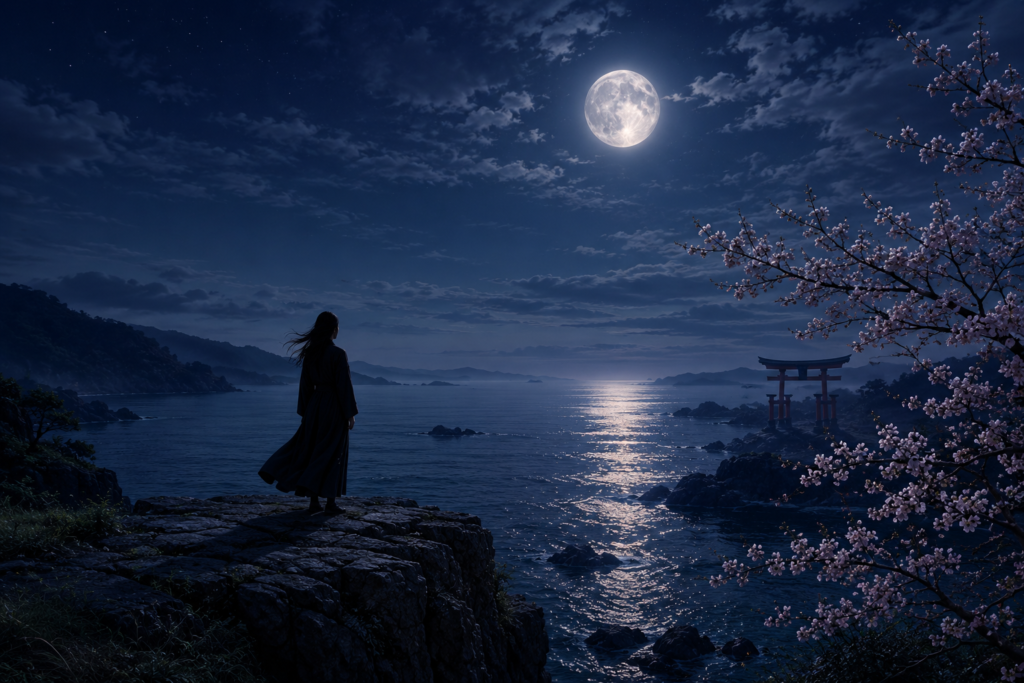
Standing at the edge of the ocean at night. Walking through an ancient forest alone. Watching a thunderstorm from inside. The particular silence of heavy snowfall.
Yugen is not just beauty. It’s the specific emotional response to beauty so deep it becomes almost uncomfortable. The Japanese describe it as a glimpse of the universe’s mystery — the feeling of being both very small and deeply connected to something vast at the same time.
Western philosophy tried to capture this with “sublime” and “transcendent.” Neither quite lands.
6. 懐かしい — Natsukashii
Pronunciation: Nat-su-ka-shee
Meaning: Warm, sweet nostalgia triggered by something from the past. Looking back with love rather than grief.
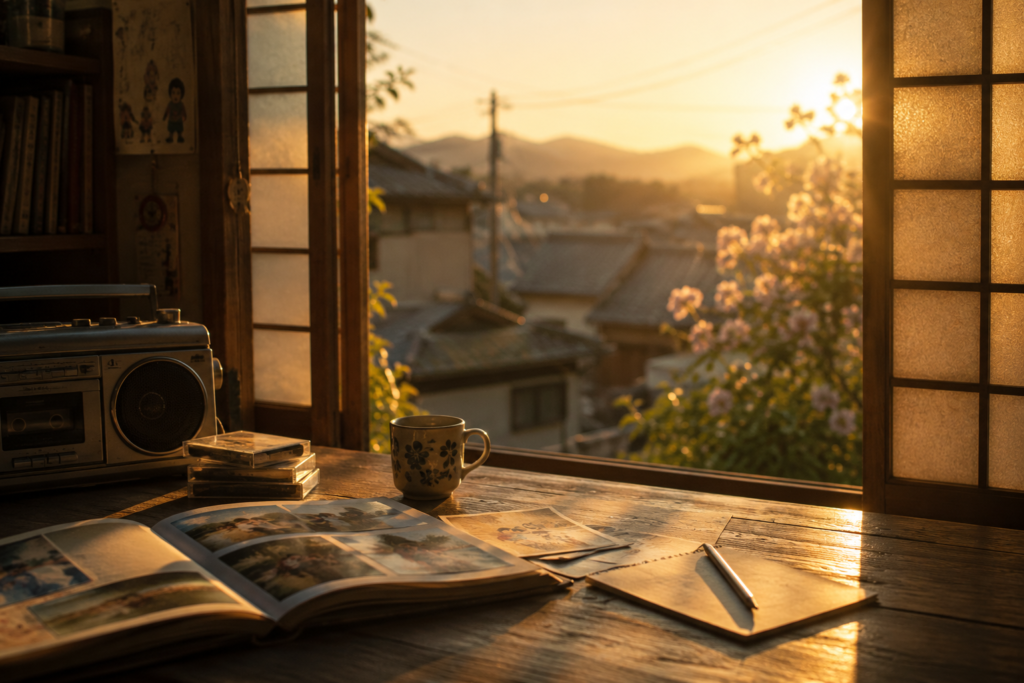
The smell of a childhood meal. A song from your teenage years playing out of nowhere. The particular quality of late afternoon light that reminds you of summers when you were young.
Natsukashii is nostalgia without the sting. It’s memory that makes you smile before it makes you sad — if it makes you sad at all.
Japanese people say it out loud when they feel it — “Natsukashii!” — like the feeling is too good not to announce. Once you know the word, you’ll want to do the same.
7. 間 — Ma
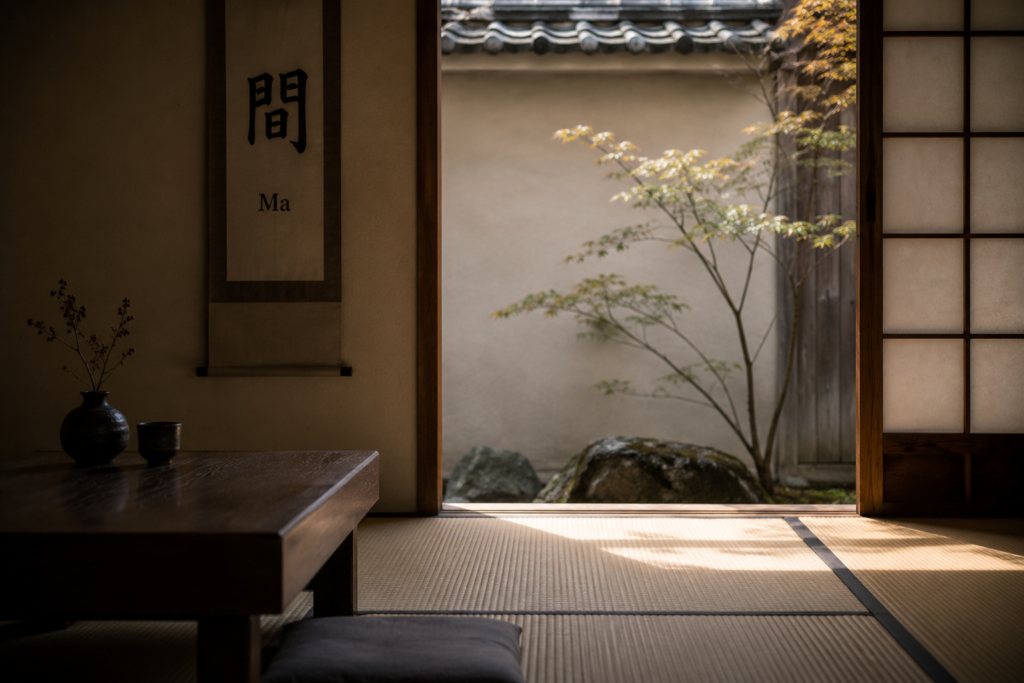
Pronunciation: Mah
Meaning: Meaningful empty space. The pause between things that gives those things their significance.
The silence between musical notes that makes the notes meaningful. The empty space in a room that gives the room its character. The pause in a conversation that lets the previous words actually land.
In Western thinking, empty space is absence — something to fill. In Japanese thinking, ma is presence. The space itself has value.
This runs through everything in Japan — architecture, music, art, garden design, conversation. The pause before someone responds isn’t awkward silence. It’s ma. The words are settling.
Once you understand ma, you notice how deeply uncomfortable Western culture is with empty space — and how much that costs us.
8. 積ん読 — Tsundoku
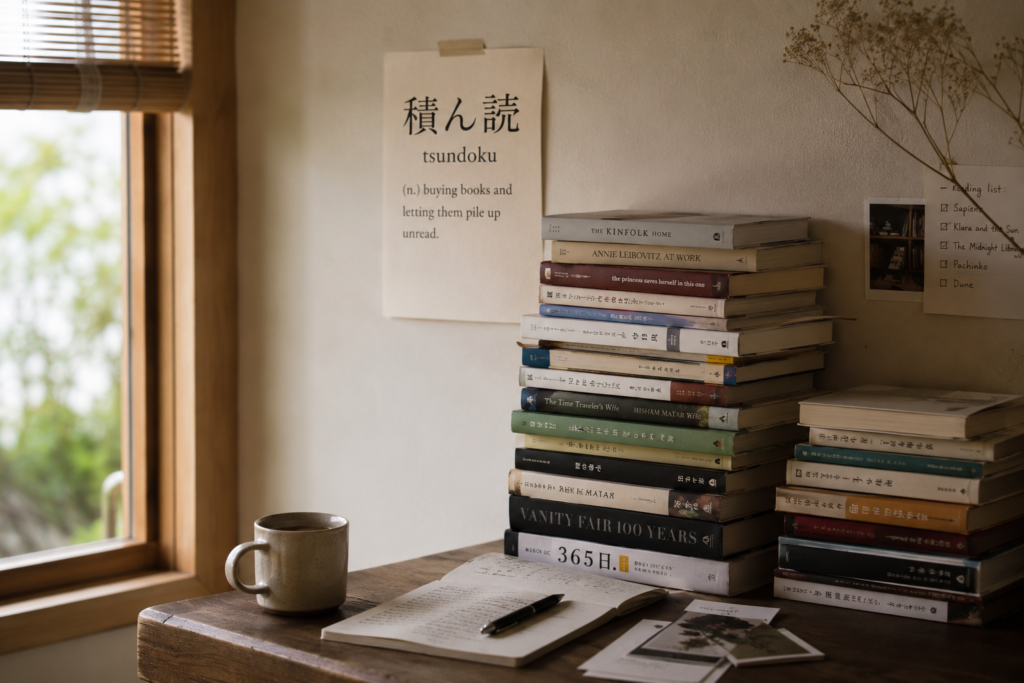
Pronunciation: Tsun-do-ku
Meaning: Buying books and letting them pile up unread.
If you have a nightstand stack you’ll definitely get to, a Kindle full of downloads you’ll read eventually, or a reading list that only gets longer — you have tsundoku.
The word is oddly comforting. Because it comes without judgment. It’s not hoarding. It’s not failure. It’s just tsundoku. A named thing. A known thing. A deeply human thing shared by readers everywhere.
Japan has some of the highest literacy rates in the world and a thriving physical book culture. Tsundoku might be the most universally relatable Japanese word that exists.
9. 哀れ — Aware
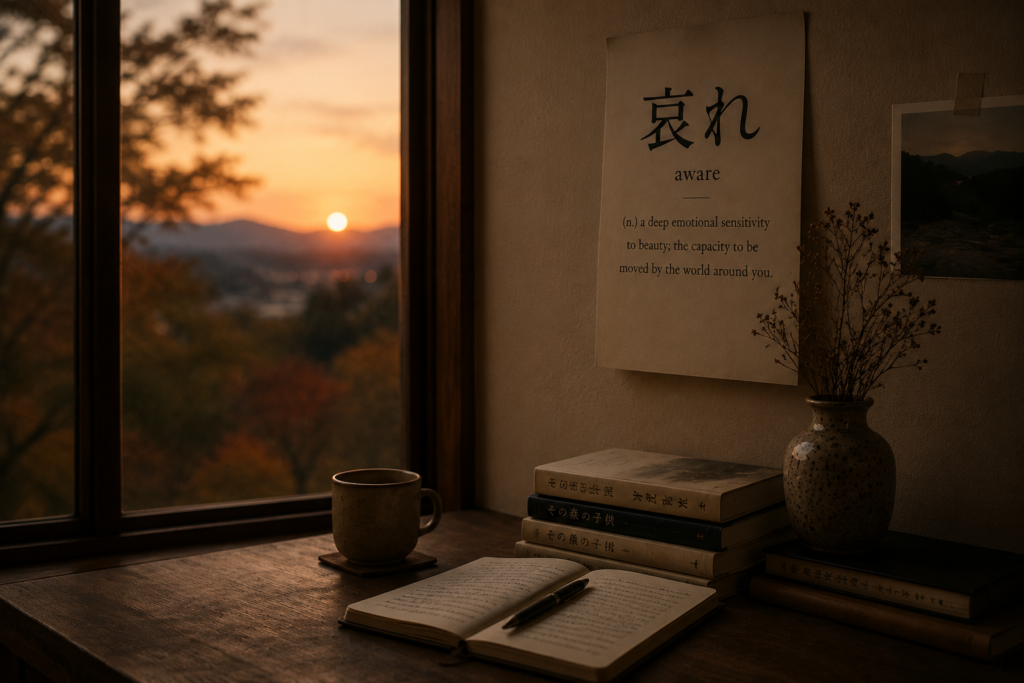
Pronunciation: A-wa-re
Meaning: A deep emotional sensitivity to beauty — an almost painful openness to being moved by the world.
The person who cries at sunsets. Who feels music physically in their chest. Who finds a quiet autumn afternoon almost unbearably moving.
This is different from mono no aware — aware on its own describes the quality of emotional sensitivity itself. The capacity to be affected. To be genuinely moved by ordinary beautiful things.
English tries to capture this with “sensitive” or “deep” — but both carry awkward baggage. Aware just describes it cleanly, with no judgment attached.
10. 森林浴 — Shinrin-yoku
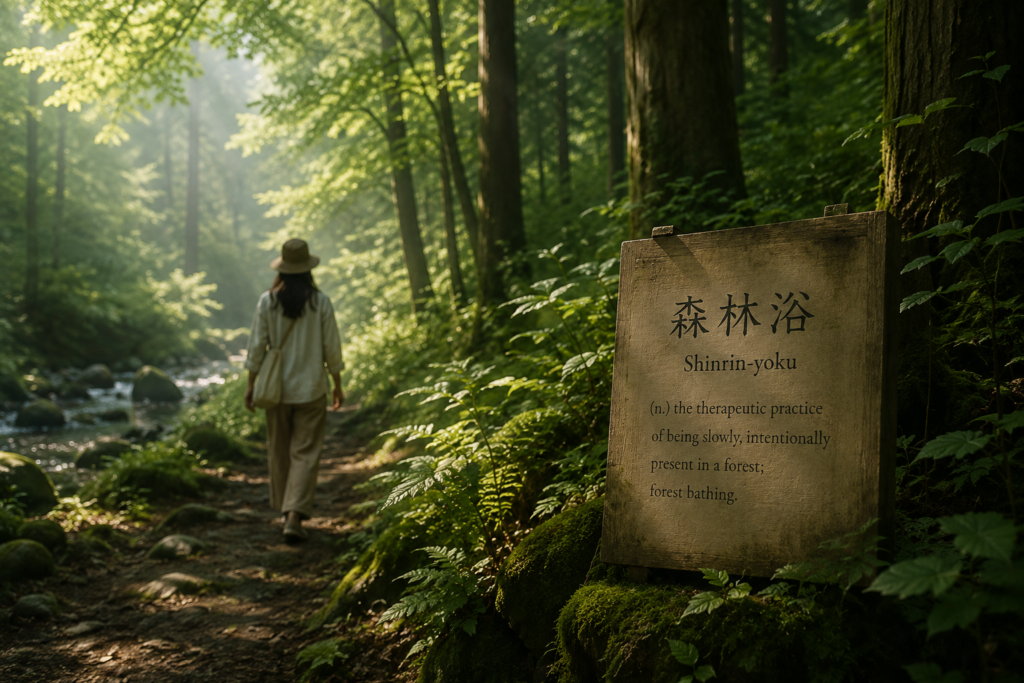
Pronunciation: Shin-rin yo-ku
Meaning: Forest bathing. The therapeutic practice of being slowly, intentionally present in a forest — not hiking, not exercising, just absorbing.
This is not metaphor. Japan developed shinrin-yoku as an official health practice in the 1980s and has conducted decades of research proving real physiological benefits — lower cortisol, reduced blood pressure, improved mood, stronger immune function.
The mechanism is real: trees release compounds called phytoncides that measurably affect human biology. Being among trees is literally good for your body in ways being in a city is not.
Shinrin-yoku is the practice of going to a forest with no destination. To breathe slowly. To listen. To let the forest do its thing.
Most of us have done this without knowing it had a name.
Why Japanese Has So Many Words Like This
It’s not a coincidence.
Japanese culture has spent centuries paying close attention to the texture of experience — the quality of light, the passage of time, the emotional weight of ordinary moments. When a culture notices something consistently, it eventually names it.
These words aren’t exotic. Every single one describes something completely universal. You’ve felt komorebi, mono no aware, natsukashii, yugen, and ma your entire life.
You just didn’t have words for them.
Now you do.
And somehow, having the word makes the feeling more real. More yours. More worth paying attention to.
That’s the power of language. That’s why Japanese is worth learning. That’s Japan, uncut.
Frequently Asked Questions
There’s no single Japanese term for them, but they’re often described as concepts with no direct English equivalent. Many come from classical Japanese literature, Zen philosophy, and traditional aesthetics.
Komorebi — dappled light through trees — is consistently cited as one of the most beautiful Japanese words by both native speakers and learners. Mono no aware and yugen are also frequently ranked among the most profound.
Ikigai is your reason for being — the thing that makes life feel worth living. It sits at the intersection of what you love, what you’re good at, what the world needs, and what you can sustain yourself doing.
Which of these words hit you hardest? Is there a feeling in your life that finally has a name? Drop it in the comments.