
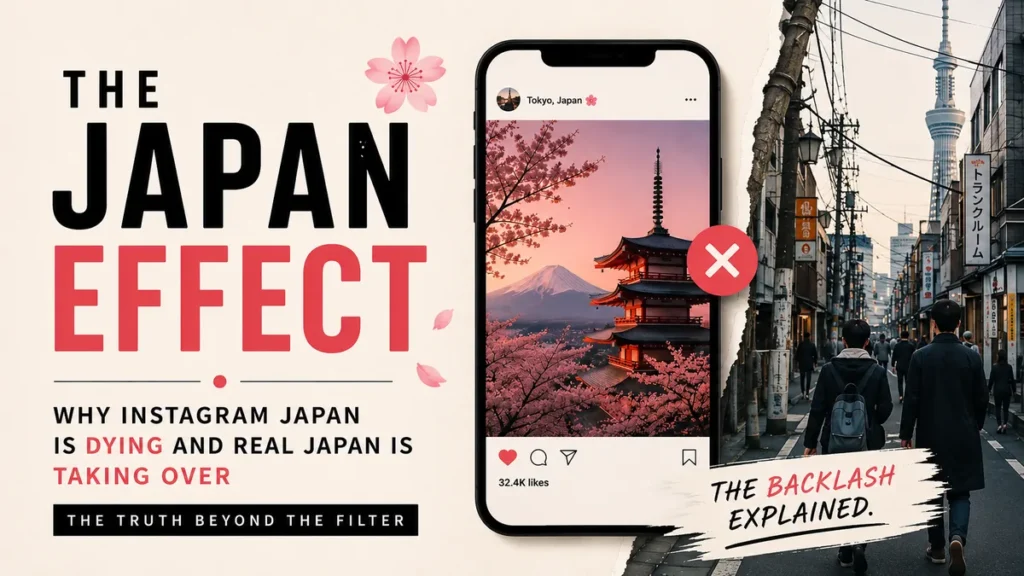
You film an ordinary video. A regular street corner. Pedestrians walking. Nothing special.
Then you add three things: “Tokyo, Japan” in white text. A cherry blossom emoji. Dreamy anime-style music.
Suddenly it’s viral. Thousands of likes. Comments from people saying “I need to go to Japan immediately.”
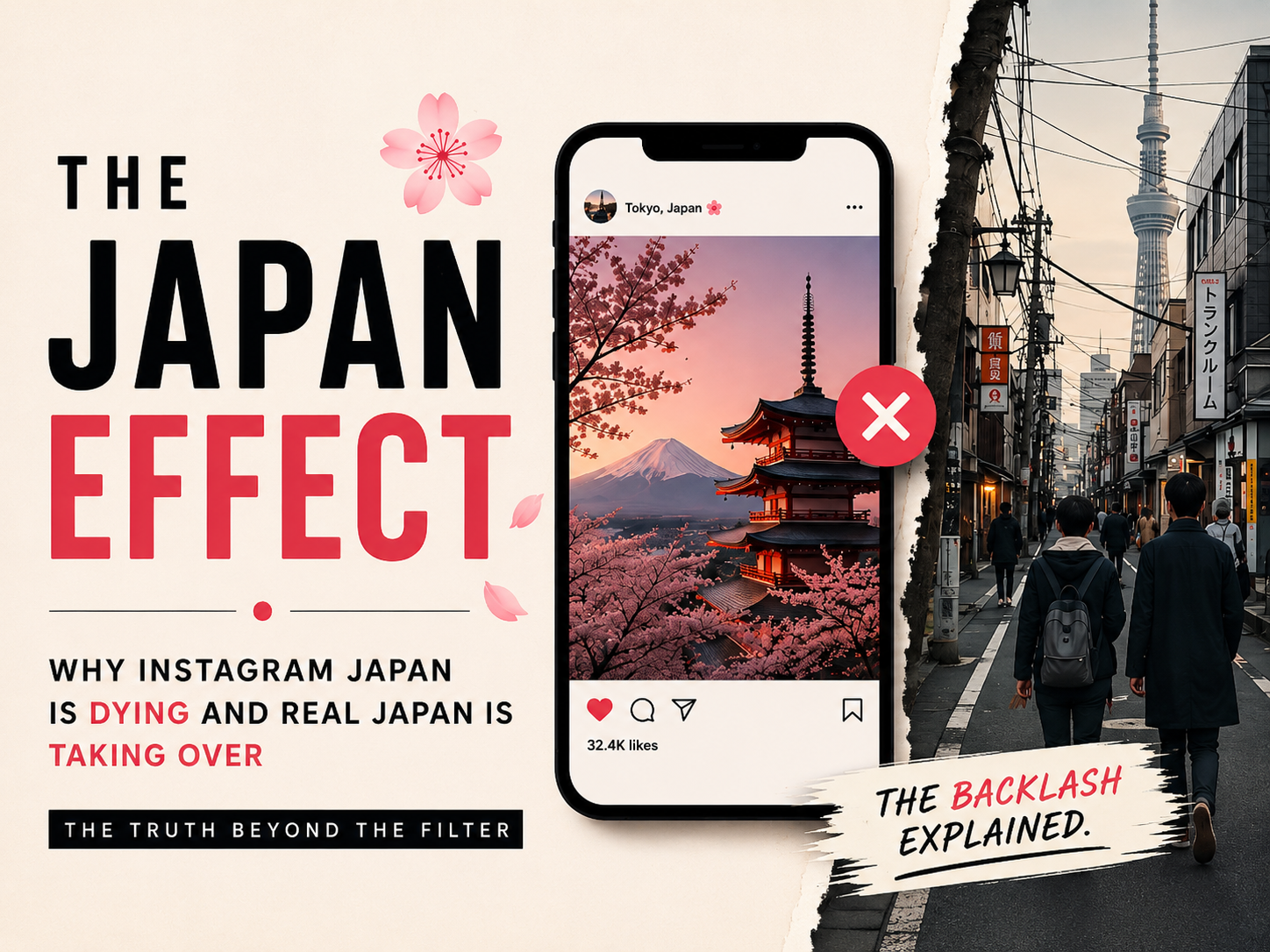
That’s the Japan Effect. And Gen Z is officially done with it.
For years, the internet has been obsessed with a very specific image of Japan — clean, cute, aesthetic, magical. Every TikTok. Every Instagram post. Every travel vlog showed the same thing: cherry blossoms, neon signs, perfect convenience stores, smiling people in traditional dress.
But in 2026, something shifted. Young people started making fun of this image. They created videos mocking how easily ordinary moments become extraordinary just by adding Japanese music and filters. The backlash is growing. And it’s revealing something important about what real Japan actually is — and what it isn’t.
This is bigger than viral trends. This is a generation rejecting a carefully crafted fantasy and demanding the truth instead.
What The Japan Effect Actually Is
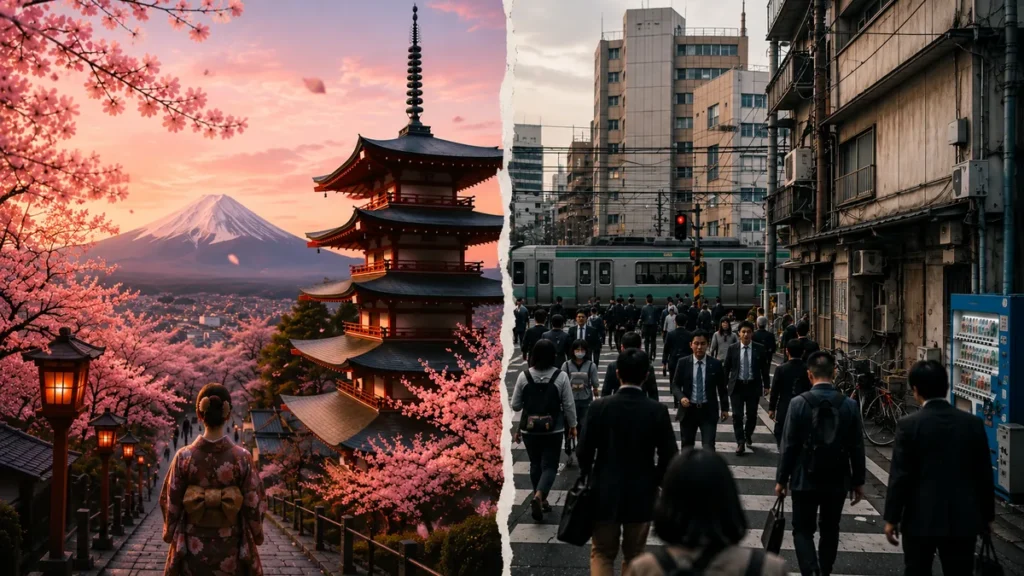
The Japan Effect emerged as a satirical trend in March 2026. Creators post short videos on TikTok showing how just adding “Tokyo, Japan” with a cherry blossom emoji can make an otherwise banal street scene more appealing to users.
Think about it. A crowded train platform is mundane. Add Japanese text. Add that emoji. Add lo-fi beats. Suddenly it feels like a scene from an anime.
Here’s the pattern: take literally any video. A person waiting at a bus stop. Someone buying groceries. A parking lot. Apply the formula. Watch engagement explode.
The point isn’t that Japan is bad. The point is that the internet has created such a specific fantasy version of Japan that reality doesn’t match the hype. And Gen Z is calling out the gap between what they expect and what they actually find.
Why This Backlash Is Happening
The Problem With Perfect Japan
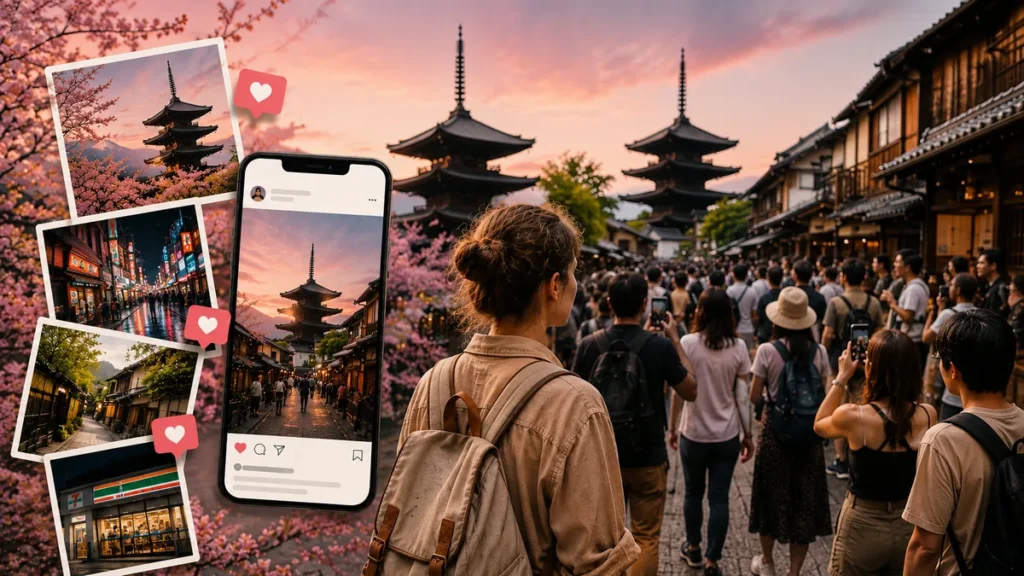
For the past five years, Western social media created a singular image of Japan. The often-romanticized image of the Asian country has become so prevalent that residents of Kyoto and other tourist hotspots have expressed exasperation with selfie-taking crowds.
This wasn’t natural. It was algorithmic. If people focus on form rather than meaning, it becomes easier to go viral. Because you don’t need to think — that’s what digital culture analysts noticed happening.
The result? Millions of people saved up money. They watched anime. They learned Japanese phrases from TikTok. They built an entire fantasy of what Japan would be like.
Then they arrived. And reality didn’t match the posts.
The Tourism Crisis
Japan welcomed a record number of visitors last year, and residents of Kyoto and other tourist hotspots have expressed exasperation with selfie-taking crowds. The city of Kyoto specifically implemented a ¥10,000 fine for tourists entering private alleys in Geisha districts just to get the perfect Instagram photo.
That’s not a small problem. That’s a cultural crisis.
Tourists aren’t coming to experience Japan anymore. They’re coming to recreate the posts they saw online. They photograph geishas. They block streets. They ignore local culture entirely. According to https://www.japantimes.co.jp/ Japan Times reporting on tourism trends this overcrowding has forced major cultural cities to take unprecedented action against visitors.
What Real Japan Actually Looks Like
Here’s the uncomfortable truth: Japan is not always clean and aesthetic. That’s only part of the reality.
Real Japan includes crowded trains where you can’t move, boring office buildings that look like every other country, aging populations in rural areas, and normal people dealing with normal problems. According to https://www.stat.go.jp/english/ Japan’s Statistics Bureau, the median age of the population is now over 48 years — one of the highest globally — reflecting demographic shifts that Instagram never shows.
Real Japan is beautiful. But it’s not always Instagram-ready.
You can spend a day in Tokyo and see the aesthetic moments. You’ll also see tired salarymen, traffic jams, and convenience stores under fluorescent lights that aren’t dreamy at all. The filtered version shows cherry blossoms. It doesn’t show the seasonal allergies that come with them. It shows traditional temples. It doesn’t show the tour buses packed with people blocking the view.
For a more comprehensive understanding of how Japan actually works — beyond the aesthetic — https://www.japan-guide.com Japan Guide offers honest travel advice from people who’ve actually lived there long-term. Their guides balance the beautiful moments with practical realities tourists encounter.
Why Gen Z Is Leading The Backlash
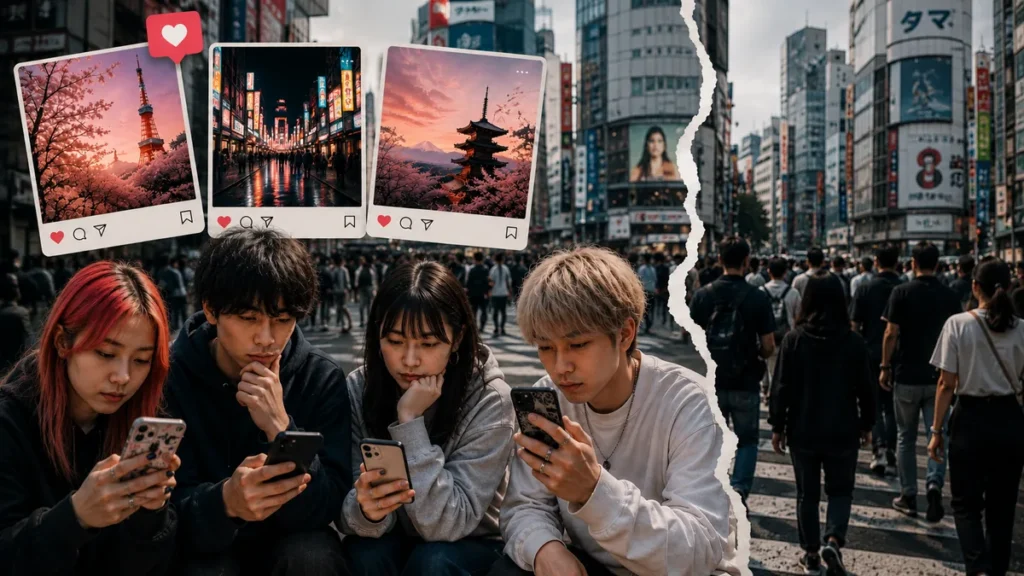
This generation didn’t invent cynicism about social media. But they’re the first to weaponize it publicly and systematically.
Gen Z watched millennials get duped by Instagram. They see how filters work. They understand that what you see online is a curated lie. And they’re tired of it.
The Japan Effect meme is funny on the surface. But underneath is genuine frustration. These young people grew up with social media. They know how it works. And they’re rejecting the false expectations it creates.
This matters because tourism is built on expectations. When expectations don’t match reality, people leave disappointed. Worse, they leave angry. https://www.nhk.or.jp/nhkworld/ NHK World’s cultural documentaries increasingly focus on showing authentic daily life in Japan, recognizing this shift in what international audiences actually want to understand.
What This Means For Japan And Travel
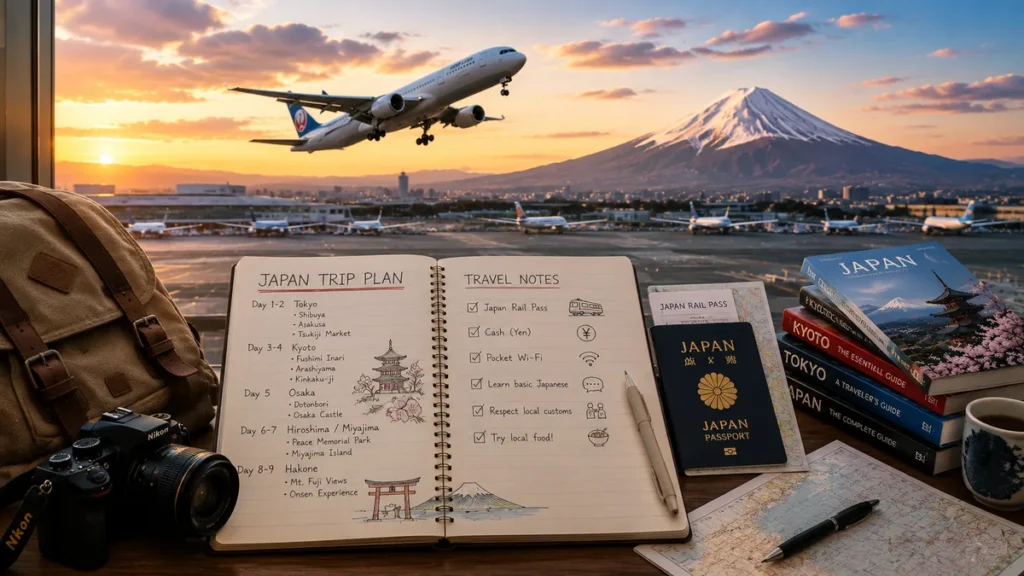
The backlash is forcing real conversations. A 25-year-old digital culture analyst noted that Japan’s formalities — from the complexity of polite language to extreme attention to detail in packaging or wrapping — may surprise visitors, but that doesn’t mean the fantasy image is accurate.
Some tourists still love Japan exactly as it is. They arrive without the filtered expectations. They experience the culture as it actually exists. And they have transformative trips.
But increasingly, travelers want authenticity. They want to avoid the Instagram hotspots. They’re seeking hidden neighborhoods. They’re asking locals what’s actually worth seeing instead of following the algorithm.
Travel writing is starting to shift too. The old “best 10 things to do in Tokyo” is dying. The new format — shown in platforms like https://theculturetrip.com/asia/japan/ Culture Trip’s Japan coverage — is “what I wish I’d known before visiting Japan.” These articles acknowledge both the reality and the romance, but don’t pretend one is the whole story.
The Shift Toward Real Content
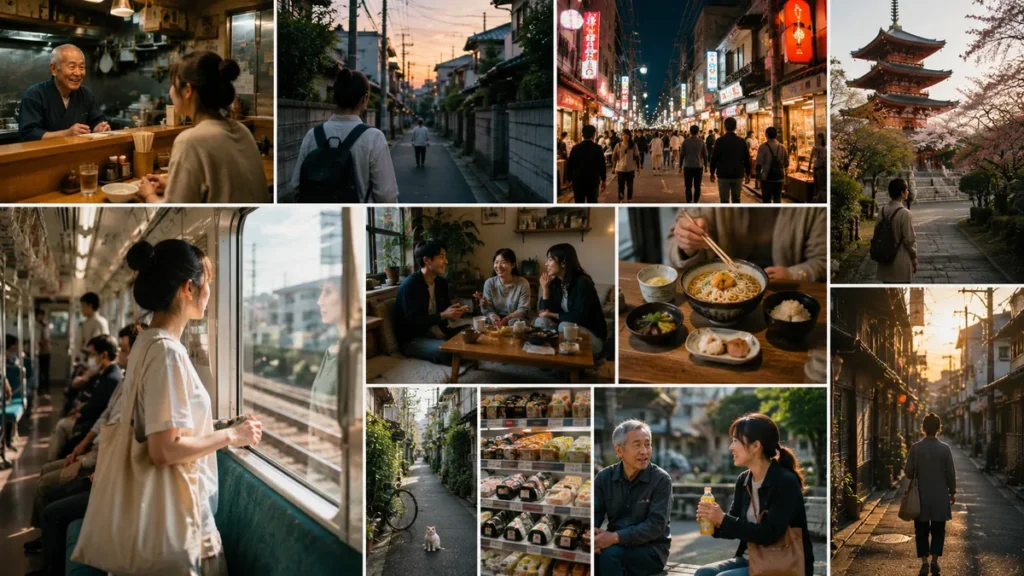
What’s interesting is that authenticity is becoming more viral than perfection.
What sets digital creators apart is their ability to share genuine, relatable experiences — and it’s often at the heart of trends that go viral across the nation.
The TikToks that are actually resonating now show real conversations with Japanese people (not posed), boring moments that reveal how life actually works, honest reactions to culture shock, and the frustrating parts alongside the beautiful parts.
This is healthy. It means the internet is finally developing an immune system against pure fantasy.
For Japan specifically, it means tourism might actually improve. When people arrive with realistic expectations, they’re less disappointed. They see beauty in ordinary moments. They respect the culture more because they’re not chasing a fantasy.
What This Says About Our Relationship With Japan
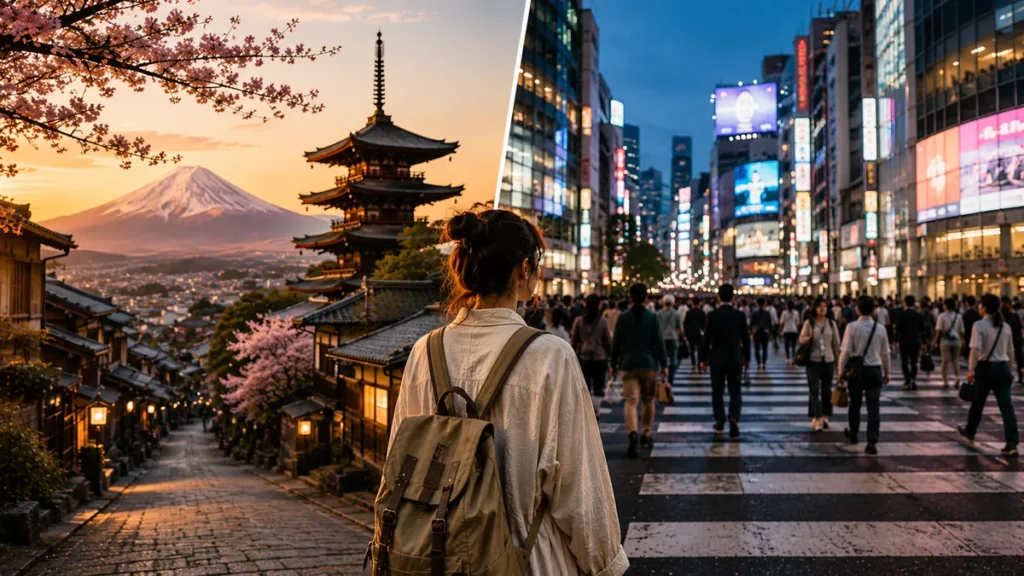
Here’s the deeper issue: Western obsession with Japan reveals something about how we consume other cultures.
We don’t want to understand Japan. We want to consume an aesthetic. We want to feel cultured without doing the work of actual cultural understanding.
That’s what the Japan Effect mocks. It’s not mean-spirited. It’s a wake-up call.
Real Japan is complex. It’s modern and traditional simultaneously. It’s clean and crowded. It’s polite and chaotic. It can’t be reduced to a filter.
The backlash is young people saying: “I’m ready to see the actual thing, not the fantasy.”
That’s actually a good sign.
Frequently Asked Questions
The Japan Effect is a Gen Z TikTok trend that mocks how adding “Tokyo, Japan” with a cherry blossom emoji and dreamy music makes any ordinary video seem magical and appealing — even when the content is completely mundane.
People are frustrated with the gap between social media’s filtered version of Japan and what they actually experience when they visit. The backlash represents a demand for authenticity over aesthetics.
Tourism to Japan increased to record numbers in 2025-2026, but with major problems: overcrowding in certain areas, disrespect for local culture, and tourists focused on Instagram photos rather than actual experiences. Cities like Kyoto have started implementing fines for tourists who disrespect cultural spaces.
Have you experienced the gap between Instagram Japan and real Japan? What surprised you most when you actually visited? Drop your honest story in the comments.
Reading time: ~8 minutes
[…] connects to broader shifts we’ve seen throughout Japan. https://uncutjapan.com/the-japan-effect/ Young people are rejecting romanticized versions of their own culture — whether that’s […]