You’re on the Tokyo subway. It’s packed. You’re excited. You pull out your phone and start a video call with your friend back home.
Nobody yells at you.
Nobody says anything at all.
But somewhere across the carriage, a Japanese salaryman in a perfectly pressed suit glances up from his book. His expression doesn’t change. Not exactly. But something shifts behind his eyes — a microscopic tightening, a barely visible tension in the jaw — and he looks back down.
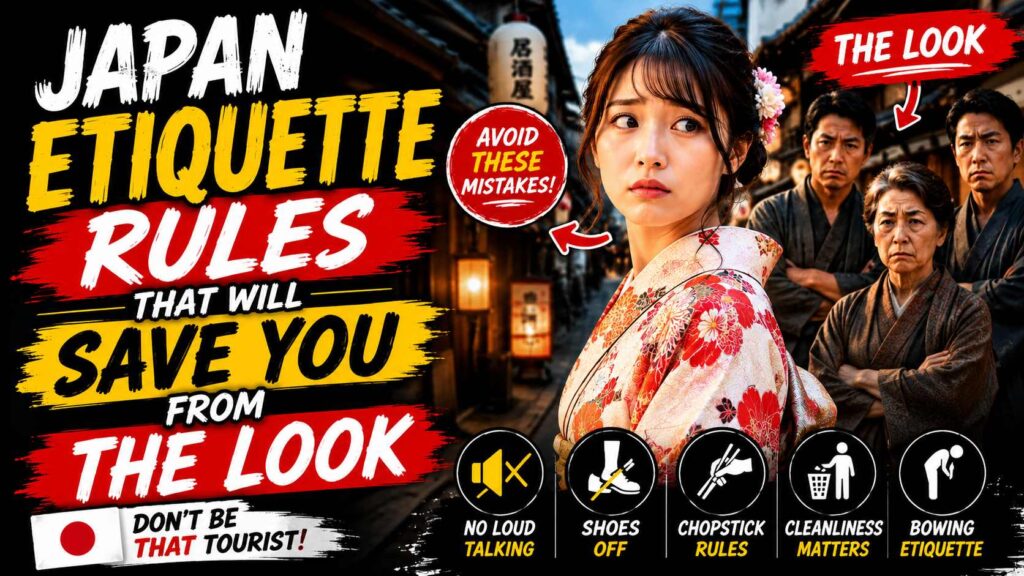
That’s THE LOOK.
You’ll know it when you get it. That quiet, polite, devastatingly Japanese expression that communicates everything without saying a single word. It doesn’t say “you’re a terrible person.” It says something far worse: “I expected better from you.”
The good news is THE LOOK is almost entirely avoidable. You just need to understand what you’re walking into.
Why Japanese Etiquette Is Different From What You’re Used To
Most countries have etiquette. Japan has an entire philosophy.
The concept at the center of Japanese social behavior is wa (和) — harmony. The idea that the group functions better than any individual within it, and that every person’s actions either support or disrupt the collective peace.
Japanese etiquette isn’t a list of arbitrary rules someone made up. It’s a finely tuned system built over centuries to keep millions of people living, working, and moving in close proximity without losing their minds.
When you break the rules as a tourist, you’re not just being rude. You’re disrupting something that millions of people actively maintain every single day. That’s why THE LOOK carries weight. It’s not personal. It’s the quiet signal that the system is working correctly — and you’re the anomaly.
Understanding this changes everything. Once you see Japanese etiquette as a system of collective harmony rather than a list of dos and don’ts, following it becomes instinctive rather than stressful.
The Rules That Matter Most — Organized By Where You’ll Break Them
ON THE TRAIN — Where Most Tourist Disasters Happen
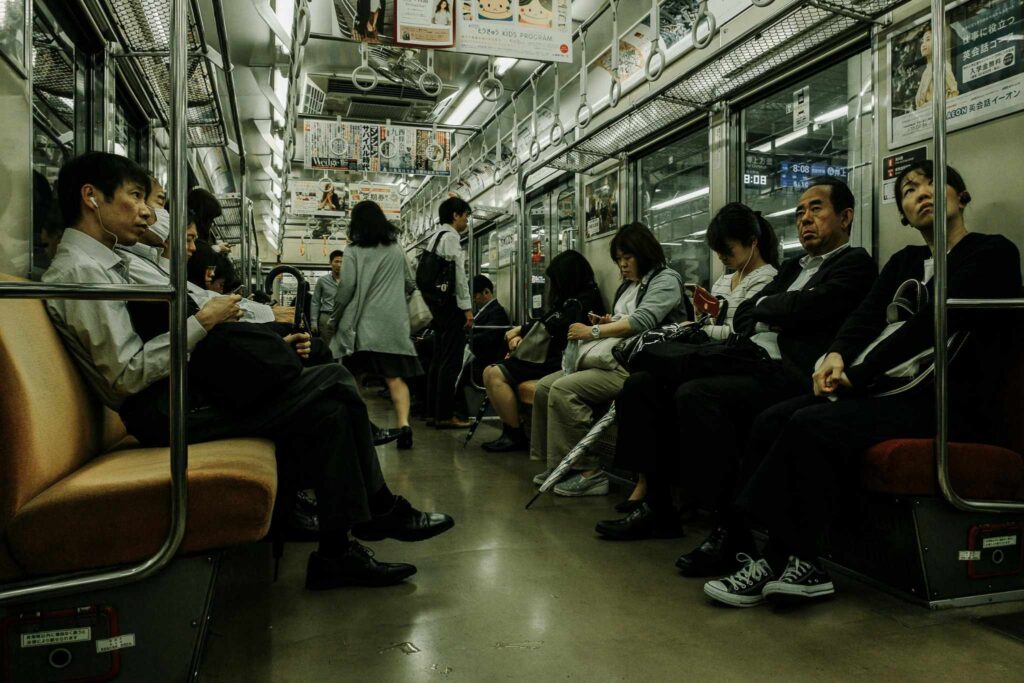
The Tokyo subway carries over 8 million people daily. It runs on time because everyone follows unspoken rules without being asked. This is either impressive or terrifying depending on where you’re from.
Rule 1: No phone calls. Ever.
Put your phone on what Japanese people call “manner mode” — silent. If you receive a call, decline it or step off at the next station. Talking on the phone on a Japanese train is the fastest way to earn THE LOOK from fifteen people simultaneously.
Rule 2: Keep your voice down.
Conversations are fine but keep them low. The ambient sound level on a Tokyo rush hour train is genuinely quieter than most libraries. You’ll notice it immediately. Adjust accordingly.
Rule 3: Take off your backpack.
In a crowded train, your backpack is hitting people in the face without you knowing it. Take it off and hold it at your feet or put it in the overhead rack. This is basic physics that somehow many tourists never consider.
Rule 4: Don’t eat or drink on local trains.
Long distance shinkansen — fine. Local trains — not fine. Even if you see a vending machine on the platform, finish your drink before boarding. The one exception is water, which most people quietly accept.
Rule 5: Let people off before getting on.
Stand to the sides of the doors. Wait for everyone to exit. Then board. This is so universally followed in Japan that there are often painted marks on the platform showing you exactly where to stand. Follow them.
Rule 6: Give up priority seats.
The pink and blue seats near the doors are priority seats for elderly people, pregnant women, and people with disabilities. If you’re sitting in one and someone who needs it gets on, stand up. If you’re not sure whether to give it up, stand up anyway.
IN RESTAURANTS — Where The Rules Get Interesting
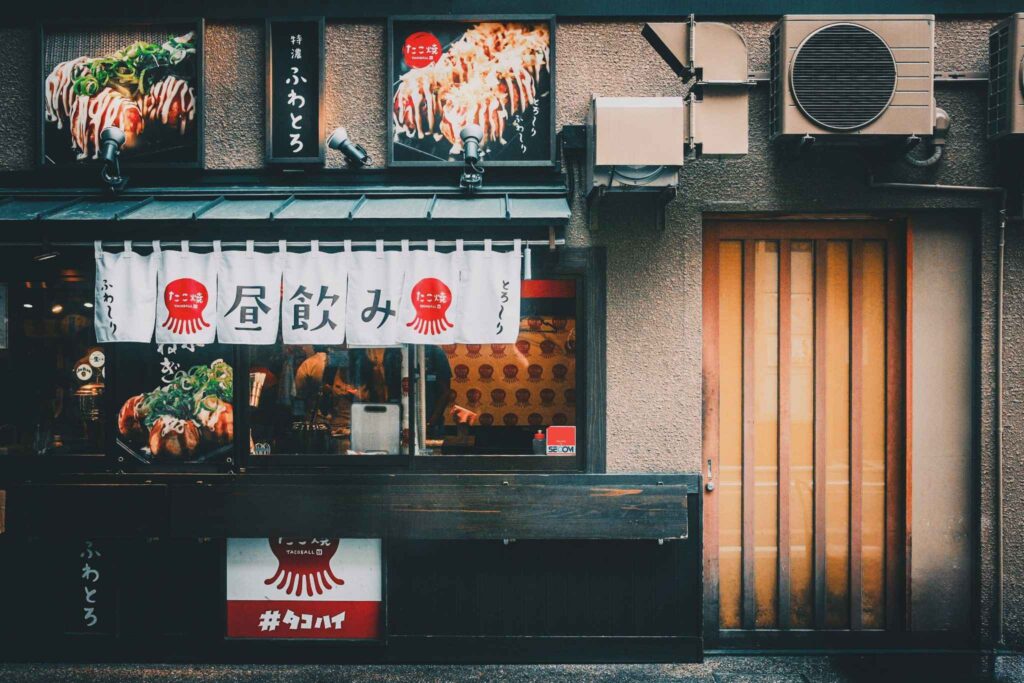
Japanese dining etiquette is where most Western tourists feel the most confused — because some things that seem rude back home are actually polite in Japan, and vice versa.
Rule 7: Say “itadakimasu” before eating.
Pronounced “ee-tah-dah-kee-mah-su.” It means something close to “I humbly receive this meal.” Say it quietly before you start eating. It’s not religious — it’s cultural. Like saying “cheers” before a drink. Locals will appreciate it more than you know.
Rule 8: Slurp your noodles.
Yes. Really. Slurping ramen, soba, or udon isn’t rude in Japan — it’s a sign you’re enjoying the meal. Some people believe it enhances the flavor by aerating the broth. Whether that’s true or not, silence while eating noodles can actually seem odd in a ramen shop. Let yourself go. Slurp away.
Rule 9: Never stick chopsticks upright in rice.
This is how incense is arranged at funerals. Sticking your chopsticks upright in a bowl of rice triggers a deeply uncomfortable cultural association with death. Rest them across the bowl or on the chopstick holder provided.
Rule 10: Don’t pass food chopstick to chopstick.
Same reason — this mimics the ritual of passing cremated bones at a funeral. If you want to share food, place it directly on someone’s plate.
Rule 11: Pour drinks for others, not yourself.
In a group setting, you pour for the people around you and they pour for you. Keep an eye on empty glasses. Offer to refill before being asked. This is one of those rules that feels strange at first and then feels genuinely thoughtful once you understand it.
Rule 12: Don’t tip. At all.
Not in restaurants. Not in taxis. Not anywhere. Tipping in Japan can cause genuine confusion or even mild offense — the implication being that the staff needed the extra incentive to do their job well, which is not how Japanese service culture works. The service you receive is exceptional because Japanese hospitality culture demands it, not because someone is hoping for extra money.
Rule 13: Pay at the counter, not the table.
In most Japanese restaurants, you take your bill to the counter and pay there. Money goes on the small tray provided — not handed directly to the cashier. This is the standard. Don’t wait at your table with your card out wondering why no one is coming.
IN TEMPLES AND SHRINES — Where Respect Goes Deepest
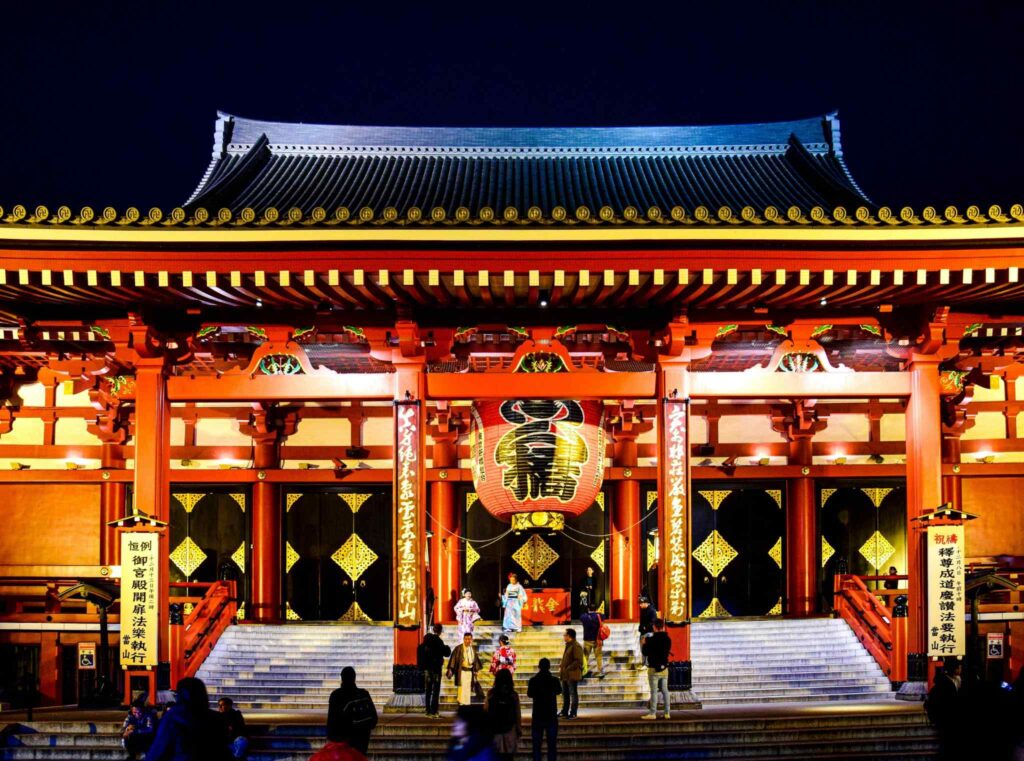
Rule 14: Purify your hands before entering.
Most shrines have a stone water basin called a chozuya near the entrance. You ladle water over your left hand, then your right hand. It’s a purification ritual, not optional decoration. Observe how locals do it and follow along.
Rule 15: Don’t clap randomly at temples.
Clapping is for Shinto shrines, not Buddhist temples. The two are architecturally distinct but easy to confuse. At a shrine: bow twice, clap twice, pray, bow once. At a temple: press your hands together without clapping. When in doubt, observe what others around you are doing.
Rule 16: Keep your voice low.
Shrines and temples are active places of worship, not just tourist attractions. People come here to pray. Treat the space accordingly.
Rule 17: Ask before photographing people.
Especially geisha and maiko in Kyoto. They are working professionals heading to appointments. Chasing them for photos or blocking their path is not only rude — it now carries a ¥10,000 fine in Kyoto’s Gion district. The alleys branching off Hanamikoji Street are legally off-limits to tourists.
IN ONSEN — Where Most Tourists Feel Most Anxious
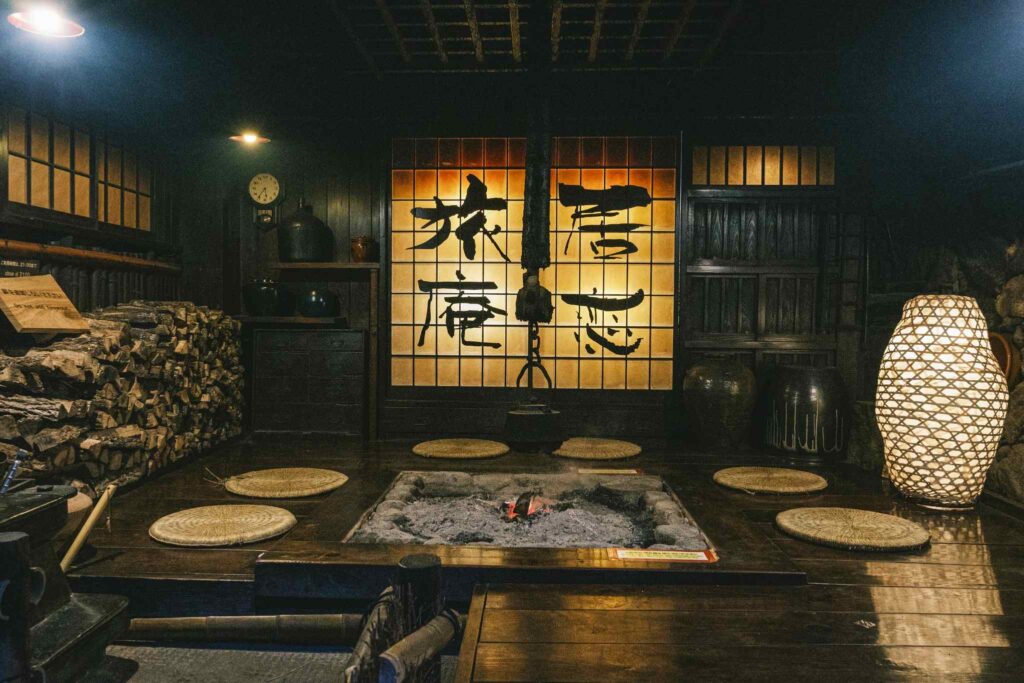
Rule 18: You must be completely naked.
No swimsuits. No underwear. No shorts. The onsen is a shared communal bathing experience and clothing is not permitted. You’ll feel self-conscious for approximately 30 seconds and then you won’t care at all.
Rule 19: Wash before entering the bath.
The shower stations are right there for a reason. Sit on the stool, wash your entire body and hair thoroughly, rinse completely, and then enter the communal bath. The bath is for soaking, not cleaning. This is the single most important onsen rule.
Rule 20: Don’t put your towel in the water.
You’re given a small modesty towel. Keep it folded on your head or on the side of the bath. Never in the water.
Rule 21: Tattoos.
Most traditional onsen still ban tattoos due to historical associations with organized crime. Check the rules before arriving. Some newer establishments are more relaxed about this, especially in tourist areas, but assume no unless confirmed otherwise.
IN PUBLIC SPACES — The Everyday Rules
Rule 22: Don’t eat while walking.
Buy your street food at the stall, eat it standing near where you bought it, throw away the packaging, then continue walking. The exception is festival areas where the rules are more relaxed. Everywhere else, walking and eating is considered messy and inconsiderate.
Rule 23: Carry your trash.
There are almost no public trash cans in Japan. This confuses every tourist. You carry your convenience store wrapper, your empty bottle, your finished coffee cup — in your bag, in your pocket, wherever — until you find a bin at a convenience store or train station. This is non-negotiable. You do not leave trash on the street. This is the entire reason Japan is so clean.
Rule 24: Don’t smoke while walking.
Most Japanese cities ban smoking on the street entirely outside of designated smoking areas — often small glass enclosures on the sidewalk. Fines exist and are enforced. Find the designated area, smoke there, and move on.
Rule 25: Queue properly.
Japan queues for everything. Trains, elevators, restaurants, convenience stores. The queue forms, everyone joins it, and nobody pushes in. Just find the back and wait. The system works because everyone participates.
Rule 26: Escalators.
In Tokyo, stand on the left, walk on the right. In Osaka, it’s reversed — stand on the right, walk on the left. Follow whoever is in front of you and you’ll figure it out within thirty seconds.
The Rule Behind All The Rules
Here’s what nobody tells you.
Japanese people are not waiting to catch you breaking rules. They’re not watching you with a checklist. They’re genuinely forgiving of tourists who make honest mistakes, especially when you clearly meant well.
What they notice — and what earns THE LOOK — is not ignorance. It’s the specific energy of someone who knows they’re doing something disruptive and doesn’t care enough to stop.
Loud phone calls on trains. Trash left on benches. Blocking walkways for photographs. These things aren’t accidental. They’re visible choices that say “my convenience is more important than the shared space we’re both using.”
That’s what THE LOOK is responding to.
The actual rule is much simpler than any list: be aware of the people around you and minimize your impact on their experience.
Do that, genuinely, and you’ll almost never get THE LOOK.
The Secret Benefit Nobody Mentions
Here’s something interesting that happens to most Western visitors after a few days in Japan.
They start following the rules without thinking about them.
Not because someone enforced them. Because being surrounded by people who genuinely care about shared spaces is contagious. You find yourself carrying your trash without being asked. You find yourself lowering your voice on trains automatically. You find yourself standing to the side of elevator doors before the thought fully forms.
And then you leave Japan. And you’re horrified by what you notice in airports, on trains, in restaurants at home.
Not because your home country got worse. Because you’re seeing it through different eyes.
That’s the lasting effect of Japanese etiquette. It doesn’t just change how you behave in Japan. It changes what you notice everywhere else.
That’s not a side effect. That’s the whole point.
It’s Japan, uncut.
Quick Reference — Japan Etiquette Cheat Sheet
| Situation | Do | Don’t |
|---|---|---|
| Train | Speak quietly, silence phone, remove backpack | Phone calls, eat, drink, loud music |
| Restaurant | Say itadakimasu, slurp noodles, pour for others | Tip, stick chopsticks in rice, pass food chopstick to chopstick |
| Temple/Shrine | Purify hands, speak quietly, observe rituals | Chase geisha, ignore no entry signs, clap at Buddhist temples |
| Onsen | Wash before entering, fold towel on head | Wear clothing, put towel in water |
| Public spaces | Queue properly, carry your trash, follow escalator rules | Eat while walking, smoke outside designated areas, litter |
Frequently Asked Questions About Japan Etiquette
Japan is genuinely forgiving of tourists who make honest mistakes. What matters is showing awareness and effort. Nobody expects you to be perfect. They do notice when you clearly don’t care.
Carrying your trash. The absence of public bins means everyone takes personal responsibility for their waste. This single habit is the foundation of Japan’s legendary cleanliness.
In most areas yes, outside of specific bans. Shibuya has a year-round street drinking ban from 6pm to 5am. Always check local rules for wherever you’re visiting.
Have you experienced THE LOOK in Japan? What etiquette rule caught you off guard the most? Drop it in the comments below — we’d genuinely love to know.